Automation helps businesses reduce repetitive work, connect disconnected applications and move information between departments without relying on someone to do every step manually.
But as businesses automate more of their operations, another question becomes important:
Where does your business data go when your workflows run automatically?
Think about the information your business handles every day. Customer details, sales records, employee information, invoices, internal reports and business documents may pass through several applications during a single workflow.
For many businesses, this is perfectly manageable with cloud-based automation platforms.
However, businesses handling sensitive information or operating under specific internal security requirements may want greater control over where their automation systems run, how they are configured and who can access them.
This is where self-hosted automation becomes relevant.
Instead of relying entirely on an automation provider to host and manage the platform, a business can deploy an automation tool on infrastructure it controls.
Tools such as n8n make this possible.
But is self-hosted automation necessary for every business? Does it automatically make your data more secure? And what should Nigerian businesses consider before choosing this approach?
Let's look at what it actually means and when it makes sense.
What Is Self-Hosted Automation?
Self-hosted automation means running an automation platform on infrastructure that you or your organization manage rather than relying on the platform provider to host the service for you.
For example, consider a business that uses an automation platform to connect its customer enquiry form, CRM and internal notification system.
When a customer submits an enquiry:
- The form captures the customer's information.
- An automation workflow processes the submission.
- The customer's details are added to the CRM.
- The relevant salesperson receives a notification.
- The business records the enquiry for follow-up.
The workflow runs automatically without requiring someone to transfer information manually.
With a managed cloud automation service, the platform provider hosts the automation environment.
With a self-hosted deployment, the business runs the automation platform on infrastructure it controls. This could be a virtual private server, a cloud server or an on-premises environment.
One important clarification: self-hosted does not necessarily mean keeping a physical server inside your office. You can self-host an application on a cloud provider's infrastructure while retaining responsibility for its configuration and management.
The important difference is who controls and manages the automation environment.
Self-Hosted Automation vs Cloud-Based Automation: What's the Difference?
Both approaches can automate business processes. The difference is mainly in infrastructure management, responsibility and control.
| Area | Managed Cloud Automation | Self-Hosted Automation |
|---|---|---|
| Hosting | Platform provider manages the environment. | You choose and manage the hosting environment. |
| Initial setup | Usually simpler. | Requires technical configuration. |
| Maintenance | Provider handles much of the infrastructure maintenance. | Your team or service provider handles maintenance. |
| Updates | Managed by the provider. | You control when and how updates are applied. |
| Infrastructure control | More limited. | Greater control over deployment and configuration. |
| Security management | Shared between provider and customer. | Greater responsibility for infrastructure security rests with you. |
| Customisation | Depends on the platform and plan. | Greater deployment and configuration flexibility. |
Neither approach is automatically better.
A managed cloud platform may be the more practical option for a small business that wants to automate processes without taking on server management.
A self-hosted deployment may be more appropriate when a business needs greater control over its infrastructure, has specific technical requirements or has the resources to maintain its own environment.
The decision should be based on business requirements, not simply the assumption that self-hosting is always more secure.
Why Data Control Matters to Nigerian Businesses
Many Nigerian businesses now rely on digital systems to manage daily operations.
A retail business may collect customer information through WhatsApp and online forms. A financial services company may process sensitive customer records. A professional services firm may store client documents and internal correspondence.
As these processes become automated, information may move between multiple platforms.
This creates an important responsibility: understanding where information is stored, where it travels and who can access it.
There are several reasons why this matters.
1. Greater Control Over Where Your Automation Runs
When you self-host an automation platform, you have more control over the infrastructure on which it operates.
For example, your business may choose a hosting provider, configure its environment and establish how the automation platform connects to internal applications.
This can be useful when your organisation has requirements concerning infrastructure location, access restrictions or internal IT policies.
However, hosting an automation platform on your chosen server does not mean all your business data stays there.
If a workflow sends customer information to an external CRM, email service, AI API or payment platform, that information may still be processed by those providers.
You must consider the entire workflow, not just where the automation platform is installed.
2. More Control Over Access and Permissions
Not everyone in a business should have access to every system or piece of information.
A sales employee may need access to customer enquiries, while an operations manager may need access to delivery records. Neither necessarily needs unrestricted access to administrative settings or sensitive financial information.
A properly configured automation environment can support access restrictions, user management and other controls, depending on the platform and deployment edition.
This is particularly important when multiple employees work with the same automation system.
3. Greater Flexibility Over Security Configuration
Self-hosting gives an organisation more responsibility for, and control over, its infrastructure configuration.
This means the business can make decisions about network access, server configuration, encryption, monitoring and other security measures.
For organisations with internal IT policies or specific operational requirements, that flexibility can be valuable.
But greater control also means greater responsibility.
An incorrectly configured server can create security problems even when the automation platform itself is reliable.
4. Better Alignment With Internal Data Policies
Some organisations have internal rules about how customer information, employee records and business documents should be handled.
A self-hosted environment can make it easier to design an automation setup around those requirements.
However, the deployment model alone does not establish regulatory compliance. Businesses still need to understand how data is collected, processed, stored, shared and protected throughout the workflow.
What Does the Nigeria Data Protection Act Have to Do With Automation?
Data protection is not just a technical concern. It is also a business responsibility.
The Nigeria Data Protection Act 2023 establishes requirements for the lawful processing and protection of personal data.
Among other things, organisations that process personal data are expected to implement appropriate technical and organisational measures to protect that information.
This includes protecting personal data against unauthorized access, disclosure, loss and other forms of misuse.
For a business using automation, this means thinking beyond whether a workflow successfully completes its task.
You also need to understand:
- What personal information does the workflow collect?
- Why is the information being processed?
- Which applications receive the information?
- Who has access to the information?
- How long is the information retained?
- What happens if an account or connected application is compromised?
An important distinction: The Nigeria Data Protection Act does not require every business to use self-hosted automation. Self-hosting is one possible deployment choice, not a legal compliance requirement.
A properly managed cloud platform may also be suitable, depending on the organisation's data protection obligations and the safeguards in place.
You can read the Nigeria Data Protection Act 2023 through the Nigeria Data Protection Commission.
Why n8n Is Relevant to Self-Hosted Automation
One automation platform worth understanding is n8n.
n8n allows businesses to connect applications, build workflows and automate processes using visual workflow design, with additional flexibility for more technical requirements.
One of its useful features is the option to choose between managed cloud hosting and self-hosting.
With n8n Cloud, n8n manages the hosting environment.
With self-hosted n8n, the organisation deploys and manages the platform on its chosen infrastructure.
This gives businesses more control over deployment, configuration and maintenance.
For example, a company could use a self-hosted n8n environment to:
- Capture enquiries from its website and route them to the appropriate team.
- Synchronize information between internal business applications.
- Generate notifications when important business events occur.
- Process documents and route them for review.
- Connect internal systems through automated workflows.
The important point is that n8n is not automatically the right choice for every business.
If you want to start quickly without managing infrastructure, n8n Cloud may be more suitable.
If you need greater deployment control and have the technical resources to manage your environment, self-hosting may be worth considering.
You can compare both options in the official n8n deployment guide.
Does Self-Hosting Automatically Make Your Automation More Secure?
No.
This is one of the most important things businesses need to understand before choosing self-hosted automation.
Running an automation platform on your own infrastructure gives you more control, but it also makes you responsible for securing and maintaining that environment.
For example, an exposed server with weak authentication can be vulnerable even if the automation platform is installed correctly.
A self-hosted automation environment should be configured with appropriate security measures.
Here are some important considerations.
1. Secure Connections
Connections to the automation platform should use HTTPS and properly configured TLS encryption.
This helps protect information as it travels between users, the automation platform and connected services.
2. Strong Authentication and Access Controls
Use strong passwords, appropriate multi-factor authentication where supported, and access permissions that reflect each user's responsibilities.
Avoid giving every employee administrative access.
3. Server and Network Protection
The server should be configured to restrict unnecessary public access.
Firewalls, network restrictions and appropriate reverse-proxy configuration can help reduce exposure.
4. Protect Credentials and API Keys
Automation workflows often contain credentials used to connect external applications.
These credentials should be stored securely, protected through appropriate encryption and never exposed in publicly accessible files or shared documents.
5. Regular Updates and Security Reviews
Software vulnerabilities can be discovered after a system has been deployed.
The automation platform, server environment and other relevant components should be reviewed and updated regularly.
6. Backups and Recovery
A business should have a reliable backup strategy.
It is not enough to assume that a server will always remain available. Accidental deletion, failed updates or infrastructure problems can interrupt operations.
Backups should cover the information needed to restore the complete environment, and recovery procedures should be tested.
7. Review What Your Workflows Actually Process
Not every workflow needs to retain every piece of information it receives.
For example, an automation that routes a customer enquiry may not need to keep detailed execution records indefinitely.
Review what information is collected, stored, logged and passed to connected services.
n8n provides official guidance on securing a self-hosted instance and improving privacy and data security.
These are not optional details to consider after deployment. They should be part of the system design.
When Should a Nigerian Business Consider Self-Hosted Automation?
Self-hosting is not something every business needs.
It becomes worth considering when there is a clear operational or technical reason for choosing it.
Here are some situations where it may make sense.
Your Business Handles Sensitive Information
If your business processes customer records, employee information, internal documents or other sensitive data, you may need more control over how your automation infrastructure is configured.
Self-hosting may provide that flexibility, provided the complete data flow is properly assessed.
You Have Specific Infrastructure Requirements
Some businesses have internal IT policies that influence where applications can run and how systems should be configured.
A self-hosted environment may offer more flexibility to meet those requirements.
You Need Greater Control Over Your Automation Environment
If you want to control deployment settings, upgrades, server resources and security configuration, self-hosting may be a suitable option.
You Have the Resources to Maintain It
This is important.
Self-hosting requires more than installing software on a server.
Someone must be responsible for updates, monitoring, backups, access management, troubleshooting and security reviews.
If your business does not have the technical capacity to manage these responsibilities, a managed cloud service may be a better choice.
When Is Cloud-Based Automation the Better Option?
Self-hosting may sound attractive, but it is not always the practical choice.
A cloud-based automation platform may be better when:
- Your business wants to automate quickly without managing servers.
- You have a relatively straightforward workflow.
- You do not have dedicated technical support.
- You prefer the provider to manage infrastructure updates and maintenance.
- Your business requirements can be met by the provider's security and data handling arrangements.
Remember, using a managed cloud service does not mean ignoring data security.
You still need to review its access controls, privacy practices, data handling arrangements and suitability for your business.
The objective is not to choose the most technical deployment option. It is to choose the one that meets your requirements without introducing unnecessary complexity.
How Marex Ventures Helps Businesses Implement Automation Systems
Choosing an automation platform is only one part of the process.
Before implementing any system, a business needs to understand how its operations currently work, where information moves and which activities should be automated.
At Marex Ventures, we approach automation as an implementation process rather than simply connecting applications and hoping everything works.
We begin with a workflow and systems audit to understand the business's existing processes, tools, bottlenecks and operational requirements.
From there, we identify where automation or custom software can make a practical difference.
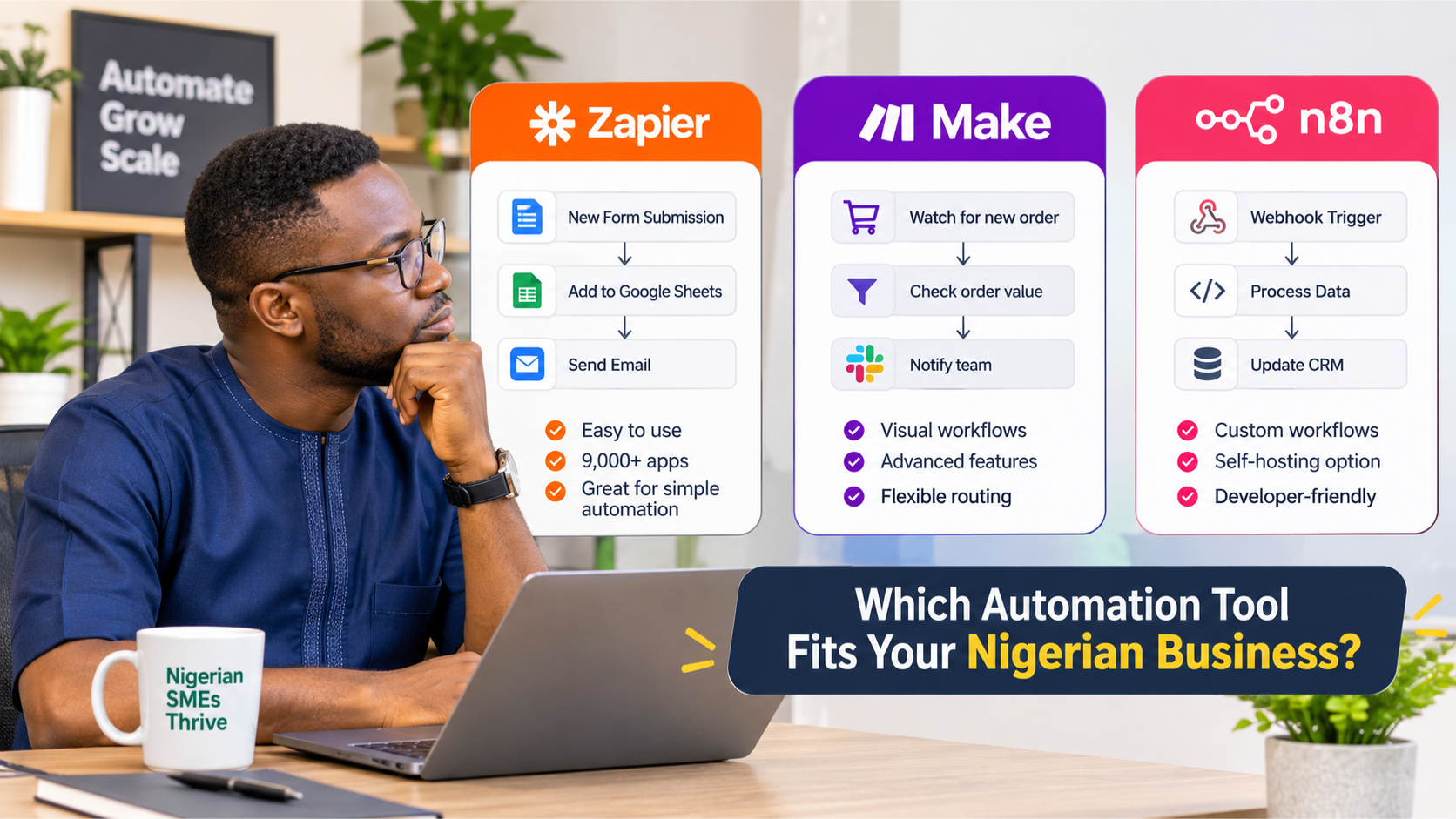
Depending on the requirements, this may involve connecting existing applications through automation systems, using tools such as Zapier, Make or n8n, or building custom tools when existing software cannot adequately support the workflow.
For businesses considering self-hosted automation, the implementation process should also account for:
- The appropriate hosting environment.
- The information each workflow processes.
- Connections to external applications and services.
- User access and permissions.
- Security configuration and maintenance responsibilities.
- Backup and recovery requirements.
- Testing before the system goes live.
The objective is to build an automation system that fits the way the business operates while taking its technical and security requirements seriously.
Final Thoughts: Choose Control That Your Business Can Manage
Self-hosted automation gives businesses an additional way to control how their automation systems are deployed and managed.
For organisations with specific infrastructure requirements, sensitive workflows or the technical capacity to maintain their own environment, that control can be valuable.
But self-hosting is not a shortcut to security.
A secure automation system requires proper configuration, access management, regular maintenance, reliable backups and a clear understanding of where business data travels.
For other businesses, a managed cloud platform may provide everything they need without the additional responsibility of managing infrastructure.
The right decision comes down to your processes, your data, your resources and your business requirements.
Don't choose an automation setup simply because it sounds more advanced. Choose one that your business can operate, secure and maintain.
If your business is considering automation but you're unsure which setup makes sense, Marex Ventures can help you assess your workflows and implement the right system.
Frequently Asked Questions
1. What is self-hosted automation?
Self-hosted automation means running an automation platform on infrastructure that your organisation manages rather than relying entirely on the platform provider to host it. This gives you greater control over deployment and configuration, but also makes you responsible for maintaining the environment.
2. Is self-hosted automation more secure than cloud automation?
Not automatically. Self-hosting gives you more control over infrastructure and security configuration, but the environment must be properly secured and maintained. A well-managed cloud service may be more secure than a poorly maintained self-hosted installation.
3. Can Nigerian businesses self-host n8n?
Yes. n8n supports self-hosted deployments on infrastructure chosen by the organisation. Businesses can deploy it on supported servers or cloud infrastructure, provided they have the technical resources to configure and maintain it.
4. Does self-hosting mean my business data never leaves my server?
No. Your automation platform may run on your chosen infrastructure, but workflows can still send information to external applications, APIs, databases and other connected services. You need to assess the complete data flow to understand where information is processed.
5. Does the Nigeria Data Protection Act require businesses to use self-hosted automation?
No. The Nigeria Data Protection Act 2023 requires appropriate measures to protect personal data. It does not require every business to use self-hosted automation. Businesses should select deployment arrangements that meet their data protection responsibilities.
6. Is n8n Cloud different from self-hosted n8n?
Yes. With n8n Cloud, n8n manages the hosting environment. With self-hosted n8n, your organisation manages the infrastructure and deployment. Both can support production workflows, but they involve different levels of technical responsibility.
7. Should a small business use self-hosted automation?
It depends on the business's requirements and technical capacity. A small business with straightforward processes may find a managed cloud platform more practical. Self-hosting may make sense when greater infrastructure control is important and the business can support ongoing maintenance.
About Marex Ventures
Marex Ventures helps businesses reduce manual work through practical automation systems, custom software and business process improvements. We assess how businesses operate, identify opportunities for improvement and implement systems that help teams work more effectively.
Systems over scattered tools. Automation over manual work. Practical solutions built around your business.